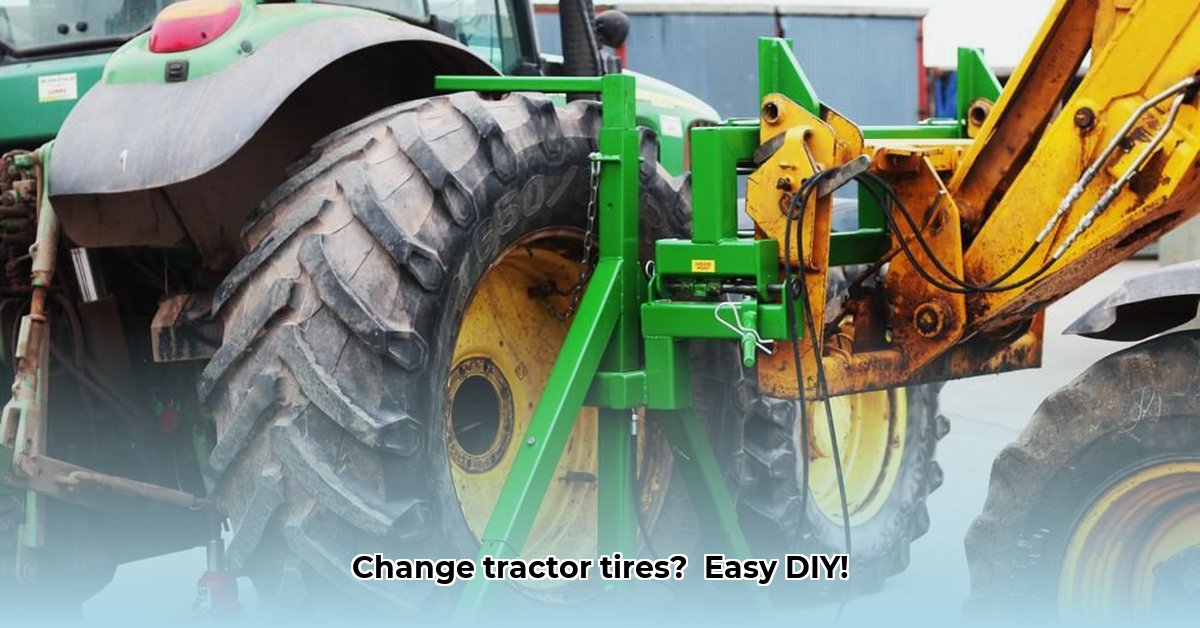
Changing a tractor tire can seem daunting, but with the right tools and this step-by-step guide, you can get back to work quickly and safely. This guide covers both tubeless and tube-type tires, ensuring you're prepared for any situation. Remember, safety is paramount throughout this process. Do you have the right tools and preparation in place? If your tractor battery is low, learn how to charge it before getting started! Let's get started!
Assessing Your Tire and Gathering Your Gear
Before you begin, assess the situation. What type of tire do you have? Most modern tractors use tubeless tires (no inner tube), but older models may use tube-type tires. This significantly affects the repair process. Next, determine the extent of the damage. A small puncture might be repairable, but severe damage necessitates tire replacement. Finally, note the tire size—usually printed on the sidewall—for purchasing a replacement.
Next, gather your tools. Improper tools can lead to frustration and injury. A sturdy jack capable of safely lifting your tractor is crucial. Don’t skimp on quality! Here's a full list:
- Powerful Jack: Sufficient to lift your tractor safely.
- Wheel Chocks: Essential for safety, preventing accidental movement.
- Lug Wrench: A properly fitting wrench is vital for efficient nut removal. A breaker bar might be necessary for stubborn nuts.
- Tire Irons (Tire Levers): Metal bars for prying tire beads off the rim.
- Soapy Water: Lubricates the tire beads for easier removal and installation.
- Air Compressor: Inflates the new tire to the correct pressure.
- Safety Glasses & Gloves: Protects your eyes and hands from potential hazards.
- New Tire (Correct Size): Double-check the old tire's sidewall for the correct size.
Step-by-Step Tractor Tire Change
Safety First: Always engage the parking brake and use wheel chocks before starting any work. This prevents accidental movement and ensures your safety. Remember, a moment of carelessness can lead to serious injury. Are your safety measures in place?
Secure the Tractor: Engage the parking brake firmly and block the wheels opposite the flat tire with wheel chocks. This is non-negotiable for safety.
Jacking Up: Carefully position the jack under a sturdy part of the tractor frame near the flat tire. Slowly raise the wheel until you have sufficient clearance to work comfortably.
Loosen Lug Nuts: Before jacking, slightly loosen the lug nuts to prevent wheel spinning once lifted.
Removing the Wheel (Tubeless): With the wheel raised and nuts loose, remove the lug nuts completely. Use tire irons to break one tire bead loose from the rim. Use soapy water to lubricate the process. Repeat around the tire until both beads are off, then remove the tire.
Removing the Wheel (Tube-Type): Repeat steps 1-3. Remove the valve core to deflate the inner tube completely before carefully removing the tube and then the tire.
Installing the New Tire (Tubeless): Carefully position the new tire onto the rim, ensuring the bead is properly seated in the rim groove. Use soapy water liberally for smooth mounting.
Installing the New Tire (Tube-Type): Insert the new inner tube, ensuring it's untwisted and unpinched. Mount the tire, ensuring the valve stem is correctly aligned.
Inflation (All Tire Types): Inflate slowly, monitoring for proper bead seating. Use a pressure gauge to inflate to the correct pressure (printed on the tire sidewall).
Lowering and Securing: Slowly lower the tractor, ensuring the wheel rests evenly. Tighten lug nuts securely in a star pattern (opposite nuts first).
Troubleshooting and Tire Care
Did you encounter any difficulties? Here are some common issues and solutions:
- Stubborn Beads: Add more soapy water and ensure proper seating in the rim groove. More leverage with tire irons may be needed.
- Stuck Lug Nuts: Use a breaker bar or penetrating oil (allowing ample time to penetrate).
- Valve Stem Issues (Tubeless): Inspect for damage and replace if necessary.
Regular tire maintenance is vital. Check tire pressure frequently, particularly before heavy work. Proper inflation ensures longer tire life and efficient tractor operation. Catching small problems early prevents larger, more expensive repairs. Did you know that regular tire checks can extend the lifespan of your tires by up to 20%?
Expert Insight: "Regular tire pressure checks are crucial for optimal tractor performance and safety," says Dr. Emily Carter, Agricultural Engineering Professor at Cornell University. "Ignoring this can lead to premature tire wear, reduced fuel efficiency, and potential accidents."
This guide provides a comprehensive overview of changing a tractor tire. Remember to always prioritize safety and consult a professional if you are unsure about any step. Proper tire maintenance is a small investment that yields substantial returns in terms of both safety and efficiency.